


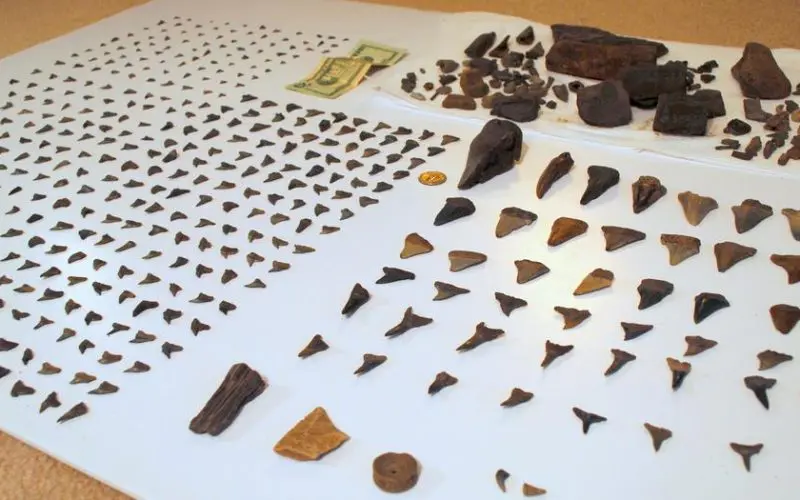

Hunting for shark teeth on Edisto is a favorite pastime for good reason. Edisto Beach is known among fossil collectors for Ice Age (Pleistocene) remains that wash in from deposits on the ocean floor offshore, and the shell lines regularly give up small black shark teeth, bits of fossil bone and the occasional prize. You don’t need special gear – just sharp eyes, a falling tide and some patience.
This guide explains why Edisto has fossils, when and how to look, how to tell a fossil tooth from a shell fragment, what shells you’re likely to find, and the places where collecting isn’t allowed.
At a Glance
- Where: The Edisto Beach shoreline, especially the shell and gravel lines left by the tide
- Best time: Around low tide, and after storms or strong onshore winds
- Cost: Free to search; admission applies in Edisto Beach State Park
- Good for: Kids, families, beachcombers, rainy-morning-after walks
- Time needed: An hour or two on either side of low tide
- Rule to know: No collecting of any kind at Botany Bay – shells, fossils and driftwood stay on the beach
Why Edisto Beach Has Shark Teeth and Fossils
Millions of years of marine sediment underlie the South Carolina coast, and some of those layers lie just offshore of Edisto. Waves and currents work the sea floor and carry fossils toward the beach. According to the Charleston Museum, Edisto is known for Pleistocene fossils, and many of the shark teeth found here have been reworked from even older layers.
Shark teeth are common because sharks shed and replace teeth constantly throughout their lives, and the hard enamel survives long after the rest of the shark is gone. Over time, minerals in the sediment replace the original material, which is why fossil teeth are black, gray or brown rather than white.
Ice Age Mammals
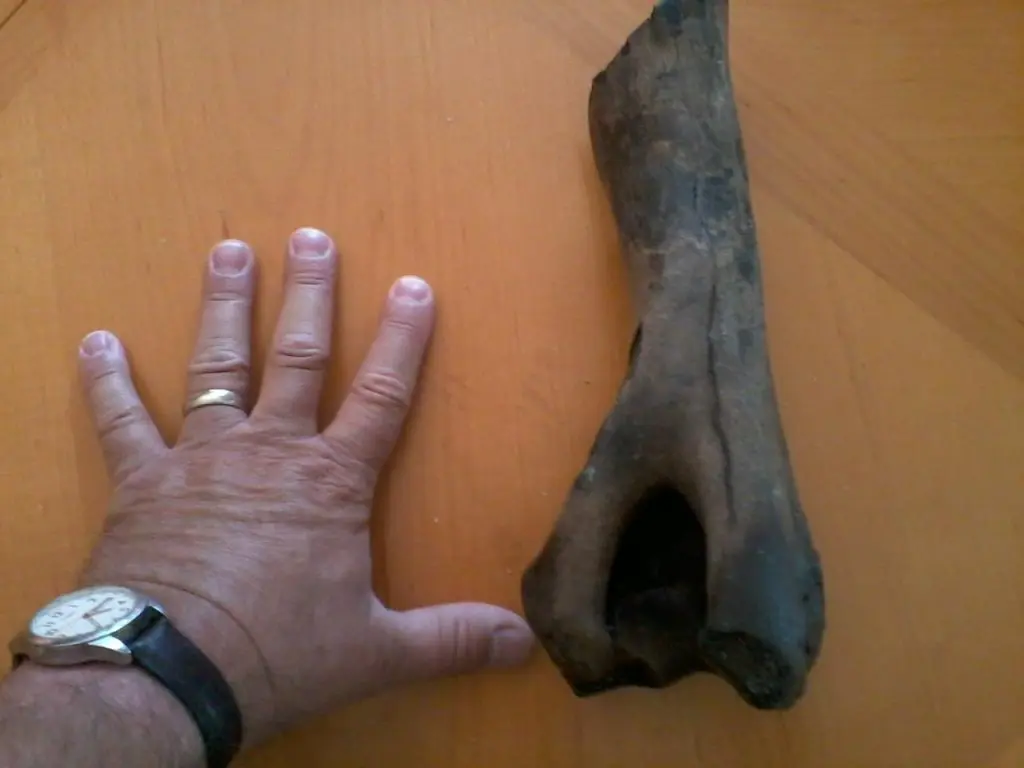
Edisto’s fossils aren’t only from sharks. Ice Age remains reported from the island’s shore include mammoth, mastodon, ground sloth, giant beaver, tapir, giant armadillo and bison. What washes up is usually a piece – a tooth, a bone fragment or an armor plate – not a skeleton, but even a fragment can be thousands of years old.
When to Hunt for Shark Teeth on Edisto
Timing makes a big difference. The best conditions are:
- Low tide: Start an hour or two before low tide and follow the water out. More beach means more shell lines to search. Check the Edisto tide charts to plan.
- After storms: Strong waves and onshore winds stir up the bottom and push fresh material onto the beach.
- Early morning: You’ll get first look at what the overnight tide left before other beachcombers.
- Winter and shoulder seasons: Fewer people on the beach, and winter storms keep refreshing the supply.
How to Find Shark Teeth
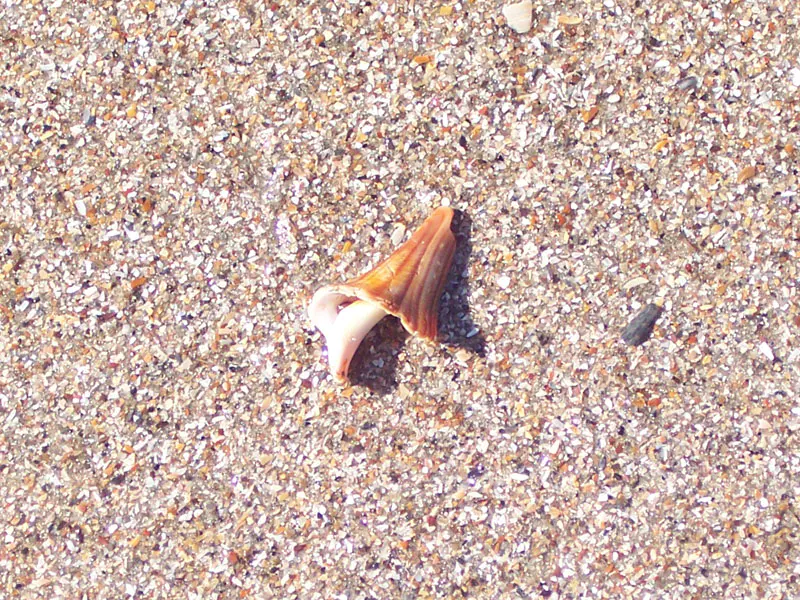
Most finds come from the shell hash – the bands of broken shell and small gravel the tide leaves behind. Walk slowly along a shell line with the sun behind you and look for a dark, glossy triangle among the dull shell pieces. Many hunters squat or sit and sift through one patch at a time rather than scanning while walking.
- Look for shine. Enamel reflects light differently from shell and stone.
- Look for shape. A tooth has a clean triangle or a narrow point with a root (the thicker base) at one end.
- Check the wet sand at the swash line, where receding waves briefly uncover small teeth.
- A small kitchen strainer or a sifting screen helps in loose shell piles.
- Bring a zip-top bag or pill bottle, because small teeth vanish in a pocket.
Most teeth you’ll find on the beach are small, from a quarter inch to an inch. Big teeth are uncommon on the beach; most large fossils in the area are recovered by divers in rivers and offshore.
Shark Tooth Identification Guide
You don’t need to name every tooth to enjoy the hunt, but a few shapes are easy to learn:
| Tooth type | What to look for |
|---|---|
| Sand tiger shark | Long, narrow, smooth-edged spike, often with tiny side points (cusplets) on the root |
| Lemon or bull shark | Broad triangle; lemon teeth are smooth with a narrow upright blade, bull teeth have fine serrations |
| Tiger shark | Wide, curved and notched on one side, like a rooster’s comb, with coarse serrations |
| Great white | Large, flat triangle with even serrations along both edges |
| Megalodon | Very large, thick, triangular and finely serrated, with a dark band (the bourlette) between blade and root |
| Ray dental plate | Flat, ridged plates or strips that look like tiny piano keys |
| Fossil bone | Dense, heavy and dark, with a spongy honeycomb texture on broken ends |
Can You Find Megalodon Teeth on Edisto?
Megalodon teeth do occur in the area, but large ones come mostly from divers working rivers and the sea floor. Beachcombers on Edisto mostly find small teeth and fragments, so treat a big meg on the beach as a rare bonus, not an expectation. A broken piece of serrated blade is still worth keeping.
Fossil or Modern?
Fossil teeth are black, gray, brown or tan and feel heavy for their size. Modern shark teeth are white or cream and lighter. If you find bone, a fossil piece is typically dark and dense, while recent bone is pale and light.
Shelling on Edisto Island
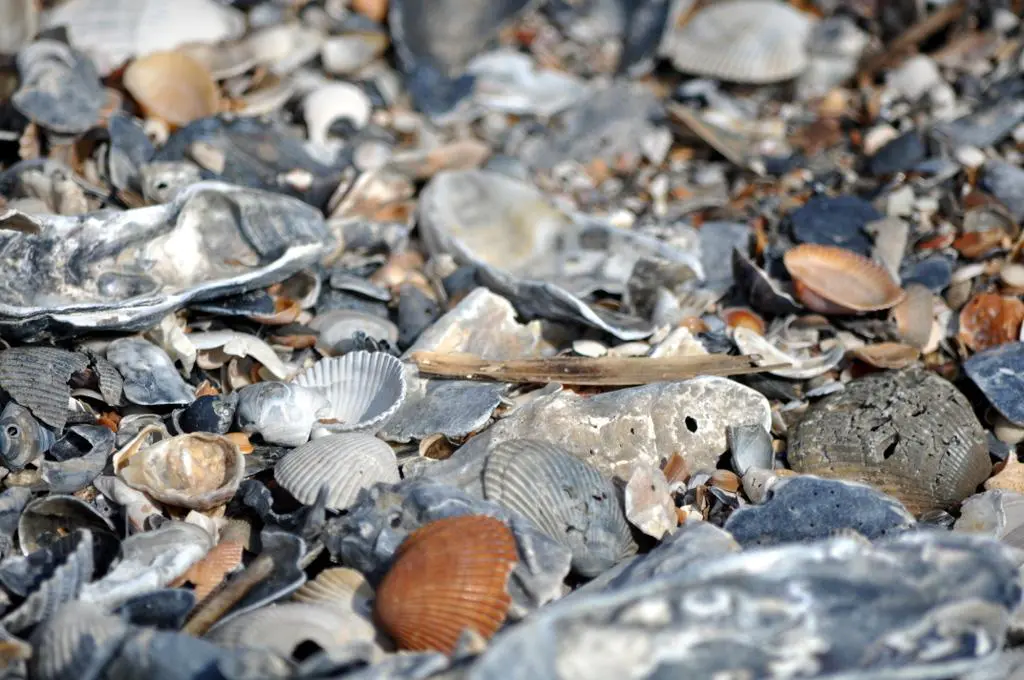
Edisto’s shell beds turn up a good mix of South Carolina shells, though no official species list for the island exists. Commonly found shells along this stretch of coast include:
- Whelks: Knobbed, channeled and lightning whelks, often in pieces but sometimes whole
- Sand dollars: Look for the bleached white ones on the upper beach
- Moon snails: Smooth, round and glossy
- Cockles and ark shells: Ribbed clams, very common in the shell lines
- Augers: Long, thin spiral shells
- Angel wings and coquinas: Fragile, pale and often in pairs
Leave Live Animals in the Water
Before you pocket a shell, make sure nobody’s home. Hermit crabs move into empty whelk and moon snail shells, and live whelks and sand dollars are common in the shallows. A live sand dollar is brown or purplish and covered in fine, fuzzy spines; a dead one is bleached white or gray and smooth. Put live animals back in the water where you found them.
Collecting Rules
- Botany Bay: No collection, removal or possession of shells, fossils, driftwood or cultural artifacts anywhere in the preserve, beach included. See Botany Bay and Driftwood Beach.
- Edisto Beach State Park: We didn’t find an official park rule on collecting shells or fossils. Ask the park office (843-869-2156) before you take anything home. See Edisto Beach State Park.
- Town beach: We found no town rule that addresses picking up loose shells and teeth on Edisto Beach. If you’re unsure, check with the Town of Edisto Beach at (843) 869-2505.
- Underwater: Collecting fossils or artifacts from submerged state waters (below mean low water, such as river diving) requires a SCIAA Hobby License with quarterly reports. Mineralized shark teeth count as fossils. Details are on the SCIAA hobby license page.
- Archaeological sites: Shell middens such as Spanish Mount are cultural sites, not shell beds. Leave everything in place.
During sea turtle season (May 1 – October 31), fill in any holes you dig. The town requires holes deeper than 12 inches to be filled, and open holes can trap nesting turtles and hatchlings. See our sea turtle rules.
Tips for a Better Hunt
- Wear water shoes or sandals – shell beds are sharp.
- Bring sunscreen and water; there are no facilities on the town beach.
- Stay off the wooden groins, which are slick and cause many injuries.
- Rinse your finds in fresh water at home and let them dry. Fossil teeth need no other treatment.
- Label your best finds with the date and beach. It turns a jar of teeth into a record of your trips.
Shark Teeth and Shelling FAQ
Where is the best place to find shark teeth on Edisto?
Search the shell and gravel lines along the Edisto Beach shoreline around low tide. Avoid Botany Bay, where collecting anything is prohibited.
What time of year is best for finding shark teeth?
Any time of year works. Winter and the days after storms are often productive because rough water brings in fresh material and the beach is less crowded.
Why are fossil shark teeth black?
Over thousands to millions of years, minerals in the surrounding sediment replace the original tooth material, turning it black, gray or brown.
Can I take shells from Botany Bay?
No. Botany Bay prohibits collecting or removing shells, fossils, driftwood and artifacts, even from the beach.
Do I need a license to collect shark teeth?
You need a SCIAA Hobby License to collect fossils from underwater in state waters, such as by diving in rivers. For loose teeth on the dry beach, we found no specific town rule; check with the town if you’re unsure.
Plan Your Trip
Shark tooth hunting is one of the top things to do on Edisto with kids, and it makes a good rainy day follow-up once the storm passes. For the island’s history, visit the Edisto Island Museum, and see Edisto Beach public access for where to park.