


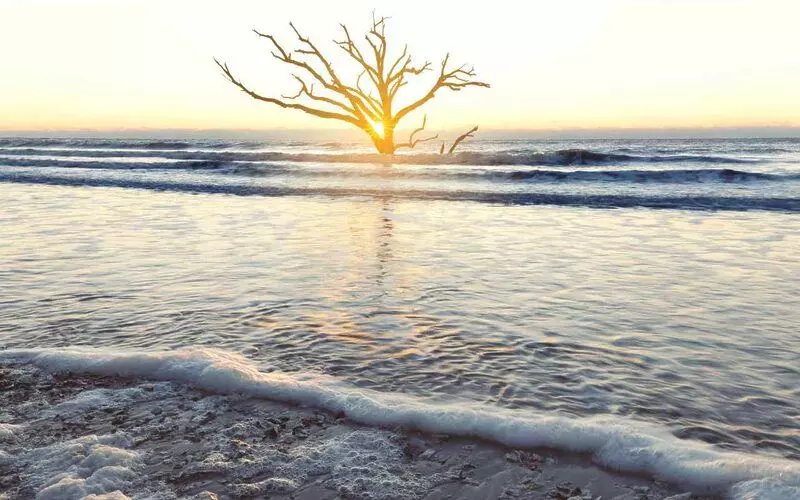

Driftwood Beach is what many visitors call Boneyard Beach, the stretch of shoreline inside Botany Bay Plantation Heritage Preserve where dead oaks, palmettos and pines stand bleached on the sand and in the surf. Boneyard Beach on Edisto is a favorite subject for photographers, and the only way to reach it is through the preserve, on foot, at low tide.
This page covers the beach itself: when to go, how to get there, how to photograph it and how to stay safe around the trees. For the preserve’s full hours, rules, driving tour and history, see our Botany Bay guide. (If you were searching for the Driftwood Beach on Jekyll Island, Georgia, that’s a different place.)
Boneyard Beach at a Glance
- Location: Inside Botany Bay Plantation Heritage Preserve, at the end of Botany Bay Road off SC Hwy 174
- Hours: 1 hour before sunrise to 1 hour after sunset, per SCDNR (as of 2026); closed Tuesdays and on scheduled hunt days
- Cost: Free; fill out a day-use pass at the kiosk at the main gate
- Access: About a half-mile walk from the beach parking area over a marsh causeway; only reachable at low tide
- Good for: Sunrise photos, beach walks, quiet time, birding
- Time needed: Plan on at least an hour on the beach, plus the walk each way
- Rules: No dogs, no drones, no collecting of anything, including driftwood and shells
- Tips: Check the tide chart and bring water; there are no restrooms or trash cans
How to Get to Boneyard Beach
Turn off SC Hwy 174 onto Botany Bay Road and follow it under the live oaks to the preserve’s main gate. Fill out a free day-use pass at the kiosk, then drive about 2 miles to the four-way crossroads and follow the signs to the beach parking area. Only vehicles up to the size of a 15-passenger van are allowed on the property’s roads.
From the parking area, a path of about a half mile crosses the salt marsh on a causeway and passes through a strip of maritime forest before it opens onto the beach. SCDNR notes that the causeway is wheelchair accessible. If you ride a bike in, leave it at the end of the causeway; bikes aren’t allowed on the beach. Dogs and horses aren’t permitted on the causeway or the beach at any time.
Why the Trees Are There
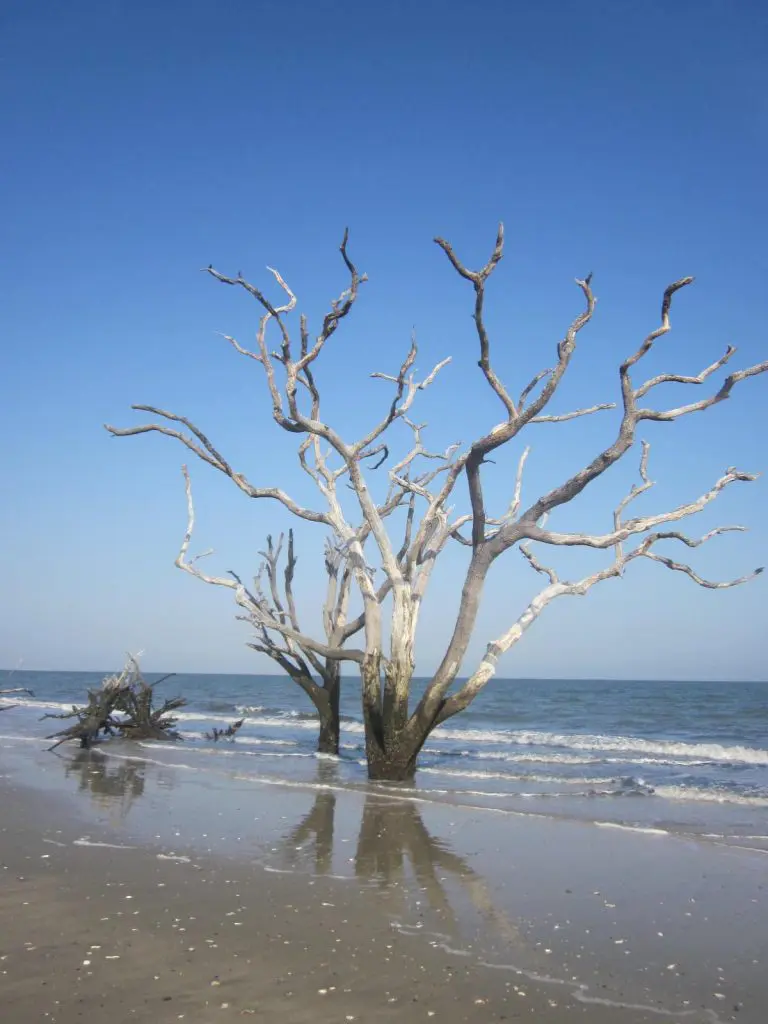
Boneyard Beach exists because the shoreline here is moving inland. As the ocean eats into the edge of the island, it reaches trees that grew in the maritime forest behind the old beach. Salt water kills them, the sand washes out from around their roots, and what’s left are trunks and limbs scoured gray and white by sun, salt and wind.
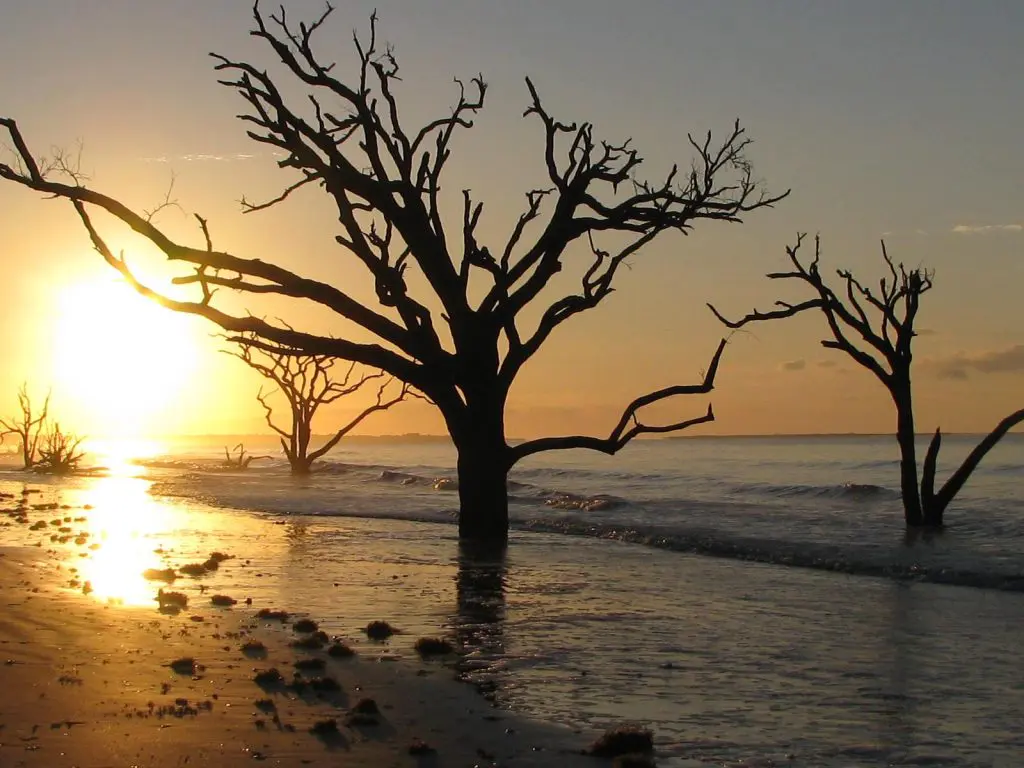
That also means the beach is never the same twice. Storms topple trees, tides bury and uncover roots, and trees that were in the forest a few years ago end up on the sand. If you have an old photo of a favorite tree, don’t count on finding it exactly where it was.
When to Go: Tides, Sunrise and Seasons
Low Tide Is Non-Negotiable
SCDNR says the beach is accessible only at low tide. When the water is up, waves wash into the tree line and you may find no dry sand at all. Check the Edisto tide charts and try to be on the beach in the couple of hours around low tide. Arriving on a falling tide gives you the longest window and the best wet-sand reflections.
Sunrise
The beach faces the open Atlantic, and sunrise is the time photographers love most. Since the gates open an hour before sunrise, you can be on the sand for first light if you start early. Give yourself time for the drive down the dirt road, the kiosk and the half-mile walk, and bring a headlamp for the path. The best mornings are the ones when low tide and sunrise line up.
Seasons
Spring and fall usually bring milder temperatures. Summer means heat, biting insects and sea turtle nesting season, when you’ll need to steer clear of marked nests. Fall and winter bring Botany Bay’s hunt closures, so check the SCDNR calendar before you plan a visit between September and January.
Photography Tips for Boneyard Beach
- Get low. Shooting from knee height puts the trees against the sky instead of the sand.
- Use the wet sand. Just after the tide drops, the flat wet beach mirrors the trees and the sunrise color.
- Try a long exposure. A tripod and a few seconds of exposure turn the surf around the trunks into a soft haze.
- Go wide, then go close. A wide lens shows the scale of the boneyard; a longer lens picks out bark texture and branch shapes.
- Watch the waterline. Keep an eye on incoming waves and your tripod legs, and keep your camera bag on high ground.
- Leave the drone at home. Drones are prohibited at Botany Bay.
Don’t climb trees for a better angle or move driftwood to tidy a composition; the trees are fragile and nothing may be removed. If you’re planning a paid shoot or a small wedding, call SCDNR at (843) 844-8957 first. More spots and timing ideas are in our Edisto photography guide.
Staying Safe on the Beach
- Stay off and out from under the trees. Dead trees and limbs break and fall without warning, especially after storms.
- Watch your feet. Broken branches, stumps and roots hide in the sand and shallow water.
- Mind the incoming tide. Water rises fast among the trees, and it’s easy to get cut off on a stretch of beach.
- Be cautious in the water. Currents run around the trunks, and submerged wood is hard to see. Read our ocean safety guide before going in anywhere on Edisto.
- Bring what you need. There are no facilities: carry water, sun protection and insect repellent, and tell someone your plans.
- Give wildlife room. Loggerhead sea turtles and least terns nest here. Stay out of posted areas.
Leave Everything Where It Lies
At Botany Bay, nothing goes home with you. SCDNR prohibits collecting or removing shells, fossils, driftwood, plants or artifacts anywhere on the property, including the beach. It’s a big change from Edisto Beach, where shelling is part of the routine, so it helps to tell kids before you arrive.
If you want a beach where you can keep what you find, head to the public beach in town; our shark teeth and shelling guide explains where and how to look.
Boneyard Beach FAQ
Is Driftwood Beach the same as Boneyard Beach?
Yes. On Edisto, “Driftwood Beach” and “Boneyard Beach” both refer to the tree-strewn beach inside Botany Bay Plantation Heritage Preserve.
Can I visit Boneyard Beach at high tide?
Not really. SCDNR says the beach is accessible only at low tide; near high tide the water reaches the trees and there may be nowhere to walk.
Is Boneyard Beach open every day?
No. Botany Bay is closed every Tuesday and on scheduled hunt days, mostly from September through January. Check the SCDNR calendar before you go.
Can I take a piece of driftwood home?
No. Driftwood, shells, fossils and everything else on the preserve must stay where you found it.
Plan Your Trip
Make a morning of it: drive the tunnel of trees on Botany Bay Road, catch low tide on the beach, then do the preserve’s driving tour on the way out. Birders should pack binoculars and read our bird watching guide, and if you want more time on your feet, see our Edisto hiking trails.