


Edisto Island attractions are less about ticket booths and more about places: a 4,000-year-old shell midden, churches built in the early 1800s, plantation ruins on a wild beach, and the home a freedman built for his family in the 1880s. A handful charge admission; most are free and many are simply seen from the road.
This page gives a one-paragraph summary of each named attraction and historic site on the island, with a link to our full guide where we have one, followed by a list sorted by area so you can plan a loop. Hours and prices below are as of 2026; always confirm with the site before you go.
At a Glance
- Location: along SC-174 (the Edisto Island National Scenic Byway) and its side roads, from the Dawhoo River bridge to Edisto Beach
- Cost: many sites are free; the Edisto Island Museum, the Serpentarium and Edisto Beach State Park charge admission
- Good for: history lovers, families, photographers, anyone on a rainy or too-hot beach day
- Time needed: half a day for the museum and churches; a full day if you add Botany Bay
- Tips: most plantation houses are private, so view from public roads only; Botany Bay is closed Tuesdays and on hunt days
Museums and Indoor Attractions
Edisto Island Museum
The museum of the Edisto Island Historic Preservation Society is the best single introduction to the island. Exhibits include the permanent Gullah Geechee exhibit “From Africa to Edisto Island: The Gullah Story,” a section on the Edisto Indians, oral histories, and part of a slave cabin from Point of Pines, one of the island’s last two (the other went to the Smithsonian’s National Museum of African American History and Culture). It is at 8123 Chisolm Plantation Road, about 7.7 miles from Edisto Beach, open Tuesday–Saturday 11 a.m.–5 p.m., with adult admission $8 (2026). Details are on our Edisto Island Museum page.
Edisto Island Serpentarium
Opened in 1999 by brothers Ted and Heyward Clamp, the Serpentarium at 1374 Highway 174 shows mostly native Southeastern reptiles in an indoor building and in outdoor gardens with low, open-topped enclosures. It runs on a seasonal schedule from March to mid-December, with the longest hours in summer. See our Edisto Island Serpentarium page for 2026 dates and prices.
Environmental Learning Center
Inside Edisto Beach State Park, the learning center (also called the Edisto Interpretive Center on the 2026 program calendar) has exhibits on the ACE Basin estuary and live animals, including an alligator. It is open Tuesday–Saturday 9 a.m.–4 p.m. and hosts naturalist programs that require pre-registration (843-869-4430). More on our Edisto Beach State Park guide.
Historic Sites and Landmarks
Hutchinson House
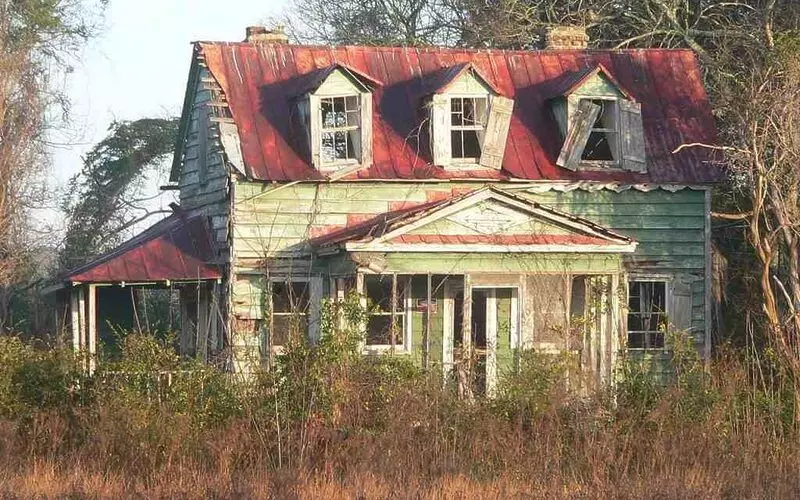
Henry Hutchinson, born enslaved on Edisto around 1860, built this two-story house around 1885; by tradition it was for his marriage to Rosa Swinton. The Edisto Island Open Land Trust bought it in 2016 and has been restoring it. It is not yet open for tours. As of October 2026 the trust invites visitors to view the house and read the signs from the parking area at 7666 Point of Pines Road; call the trust at 843-869-9004 about tours. Our museum page has more on the house.
Historic Churches
Three churches along SC-174 are on the National Register of Historic Places. Edisto Island Presbyterian Church’s current building dates from 1831, for a congregation organized by about 1710. The Edisto Island Baptist Church at 1644 Hwy 174 was built in 1818 and still has its slave gallery; after the Civil War it passed to its Black members, and in 2025 it received the island’s first state historical marker. Trinity Episcopal’s present building is dated 1876. All have active congregations, so visit the grounds respectfully and avoid service times. See Historic Churches of Edisto Island.
Spanish Mount
Spanish Mount is a shell midden of oyster shell and pottery fragments left by Native Americans roughly 4,000 years ago, on Scott Creek at the end of the 1.7-mile Spanish Mount Trail in Edisto Beach State Park. It has lost much of its height to erosion, and state archaeologists expect it to disappear within our lifetime. Read Spanish Mount and the Indian Mound Trail.
Bache Monument
In January 1850, Alexander Dallas Bache’s U.S. Coast Survey team measured a baseline about 6⅔ miles long across Edisto, the third of seven baselines in its survey of the coast. Granite markers survive at both ends, and the line is listed on the National Register. One marker sits at the end of the 0.2-mile Bache Monument Trail near the park’s learning center.
Botany Bay Plantation Heritage Preserve
Botany Bay combines two former Sea Island cotton plantations, Bleak Hall and Sea Cloud, and has been managed by SCDNR and open to the public since 2008. A self-guided driving tour passes the Gothic Revival Bleak Hall icehouse, a tabby barn, a slave house chimney and the Sea Cloud ruins before you walk to Boneyard Beach. Entry is free with a day-use pass, but the preserve is closed every Tuesday and on scheduled hunt days. Full details: Botany Bay guide and Driftwood Beach.
Tunnel of Trees and Botany Bay Road
The unpaved road to Botany Bay passes under a long canopy of live oaks. In 2025 SCDNR added 176 acres of former farmland along this stretch to the preserve, land that had been at risk of housing development. See Tunnel of Trees on Botany Bay Road.
Brick House Ruins
The brick walls of the Paul Hamilton house, built around 1725 and gutted by fire in 1929, are listed on the National Register. The ruins are on private land owned by the same family since 1798 and open only at occasional fundraising events, so don’t go looking for them on your own. Our Tunnel of Trees page covers the ruins in more detail.
The Lost Village of Edingsville
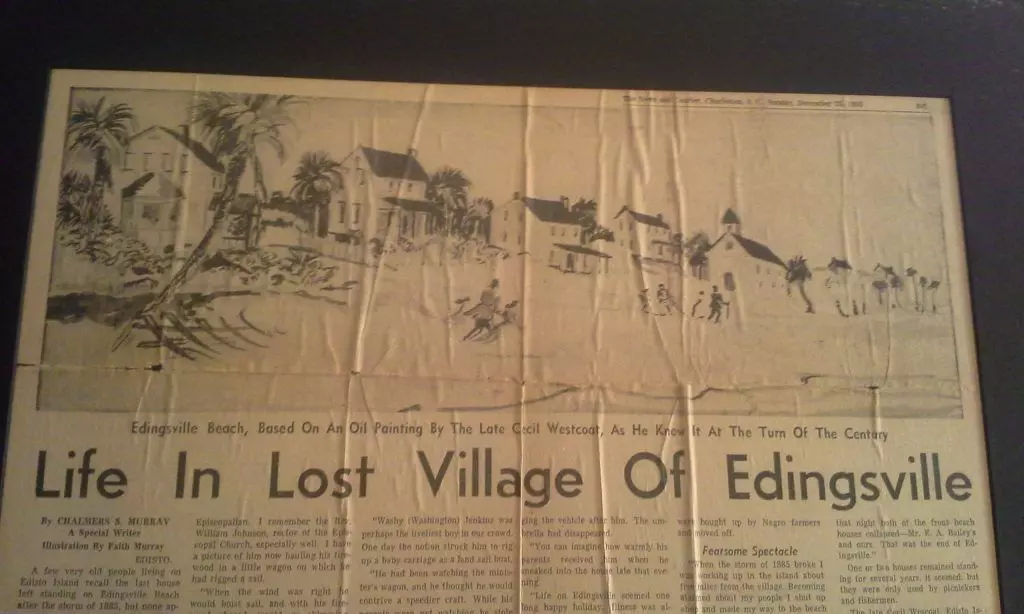
Before the Civil War, Edisto planters spent summers in a village on Edingsville Beach. It was largely abandoned after the war, and the 1893 hurricane swept away what remained. One building survives: Bailey’s Store, moved inland around 1870 and now at 1444 Hwy 174. There is no village site to tour, but the story is worth knowing. Read The Lost Village of Edingsville Beach.
Plantation Houses
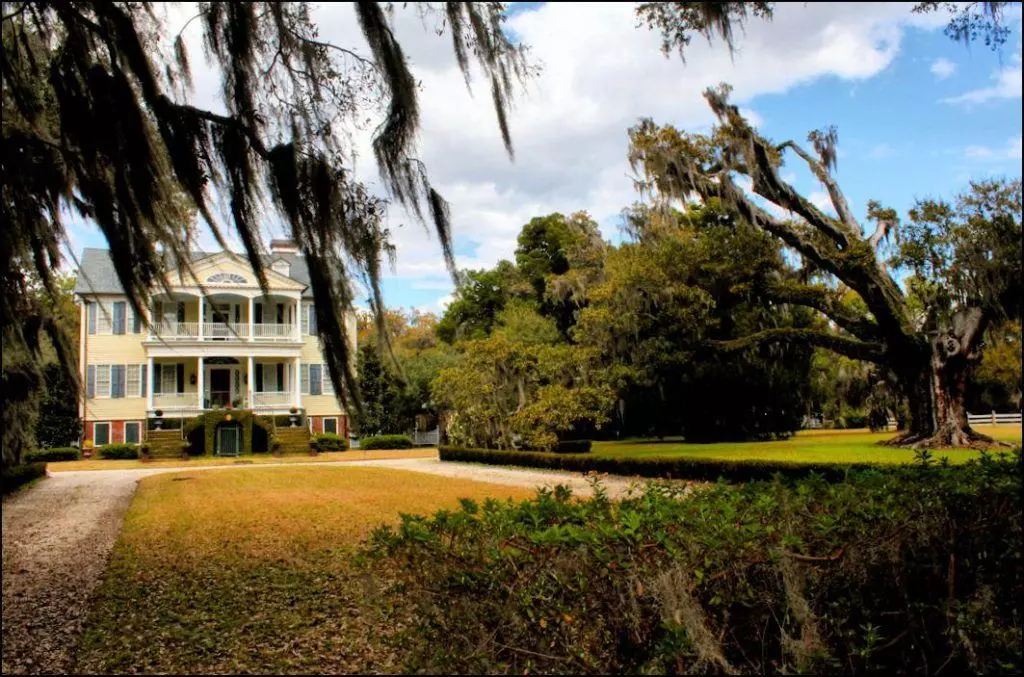
Edisto has more than a dozen plantation houses on the National Register, including the William Seabrook House, Peter’s Point, Cassina Point and Prospect Hill. All are private homes. Don’t drive up lanes or enter gates; if a house is visible from a public road, enjoy it from there. The historic preservation society’s annual Edisto & Beyond Tour is the usual way to see sites that are seldom open (the 2026 tour sold out).
Gullah Geechee Heritage
Edisto lies within the Gullah Geechee Cultural Heritage Corridor, a National Heritage Area designated by Congress in 2006 that runs from Pender County, North Carolina, to St. Johns County, Florida. There is no single corridor visitor site on the island; the heritage lives in its churches, family land, foodways and the museum’s Gullah exhibit. Start with our Gullah culture page and browse our Gullah Geechee stories.
Natural Attractions
- Edisto Beach State Park: beach, trails, campground and learning center. Park guide.
- Legacy Live Oak Memorial Park: a 12.4-acre Edisto Island Open Land Trust park on Sand Creek just off Hwy 174, with a trail, marsh views and birding.
- Boneyard Beach: driftwood trees at Botany Bay, low tide only. Driftwood Beach.
- The ACE Basin: the vast estuary around the island. ACE Basin guide.
Edisto Island Attractions by Area
Use this list to plan a loop. The Edisto Island National Scenic Byway follows SC-174 from the McKinley Washington Jr. Bridge over the Dawhoo River to the beach, and street numbers on SC-174 get lower as you drive south toward the ocean.
Along SC-174 (Driving Toward the Beach)
- Edisto Island Baptist Church, 1644 Hwy 174
- Trinity Episcopal Church, 1589 Hwy 174
- Bailey’s Store (the Edingsville survivor), 1444 Hwy 174, seen from the road
- Edisto Island Serpentarium, 1374 Hwy 174
- Edisto Island Presbyterian Church, also on Hwy 174
Off the Highway
- Botany Bay Road, the tunnel of trees and Botany Bay Plantation Heritage Preserve (closed Tuesdays)
- Edisto Island Museum, 8123 Chisolm Plantation Road
- Hutchinson House (exterior only), 7666 Point of Pines Road
- Legacy Live Oak Memorial Park, on Sand Creek just off Hwy 174
Edisto Beach
- Edisto Beach State Park: Spanish Mount, the Bache Monument and the learning center
- Edisto Beach, with 37 public beach accesses along Palmetto Boulevard
Edisto Island Attractions FAQ
What is the most popular attraction on Edisto Island?
Botany Bay Plantation Heritage Preserve, with its driftwood-covered beach and the oak-lined road leading to it, is the island’s best-known attraction. Edisto Beach State Park is the main stop for beach days, trails and camping.
Is the Hutchinson House open to the public?
Not for tours yet. Restoration has been under way for several years, and as of October 2026 visitors can view the house and read the signs from the parking area. Call the Edisto Island Open Land Trust at 843-869-9004 for updates.
Can you tour Edisto’s plantation houses?
Not on your own. The plantation houses are private homes. The historic preservation society’s once-a-year Edisto & Beyond Tour sometimes opens sites that are otherwise closed, and Botany Bay’s plantation ruins are open to the public.
Which Edisto attractions are free?
Botany Bay (with a free day-use pass), driving the tunnel of trees, the church grounds, the beach and the Legacy Live Oak Memorial Park are free. The museum, the Serpentarium and the state park charge admission.
Are Edisto’s attractions open on Sundays and Mondays?
Plan carefully. The museum and the park’s learning center are open Tuesday–Saturday, and the Serpentarium is closed Sundays and Mondays in its 2026 schedule. Botany Bay is open Sunday and Monday but closed Tuesday.
Plan Your Trip
Pair the museum and churches with a stop from our restaurant guide, and save Botany Bay for a low-tide morning. For a full list of activities see things to do on Edisto Island; for history in depth, browse our Edisto history archive; and for the island’s faith history, see our historic churches guide.