


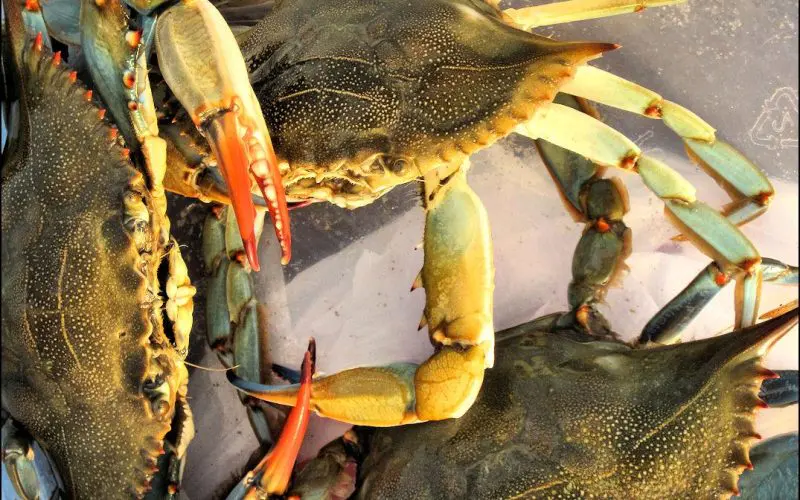

Crabbing on Edisto is about as simple as Lowcountry fun gets: a chicken neck, a length of string and a dock over moving water. Blue crabs live in every creek on the island, and a family can fill a cooler on a good afternoon. Add a cast net for shrimp and mullet, or try shrimp baiting in the fall, and you’ve got the makings of a seafood boil you caught yourself.
This page covers how to crab and cast net, the fall shrimp baiting season, where to go, and the South Carolina licenses, seasons and limits in effect for 2026.
At a Glance
- Where: Tidal creeks, docks and public landings around Edisto, the state park’s Big Bay Creek dock area, and the Botany Bay front beach
- Season: Crabs are around year-round but best from late spring through fall; shrimp baiting runs Sept 11 – Nov 9, 2026
- License: None for crabbing with up to 3 handlines, drop nets or fold-up traps; required (age 16+) for cast netting and shrimping
- Cost: A few dollars for string, bait and a net; licenses from $10
- Good for: Families, kids, anyone who wants dinner with a story
- Tip: Crab on a moving tide and check your lines often
How to Go Crabbing on Edisto
You need very little gear to start crabbing on Edisto. Here’s the classic method:
- Tie a raw chicken neck or a fish head to a weighted string and lower it to the bottom near pilings or a grassy bank.
- Wait for the line to tighten or creep sideways – that’s a crab tugging at the bait.
- Pull the line in slowly and steadily so the crab keeps feeding instead of letting go.
- When the crab is just under the surface, slide a long-handled dip net under it from below and lift.
Drop nets and fold-up traps work the same way without the finesse: bait them, lower them to the bottom, wait 5–10 minutes and pull them up quickly so the crabs can’t swim out. The incoming and outgoing tides usually beat slack water, and crabs feed more actively when the water is warm.
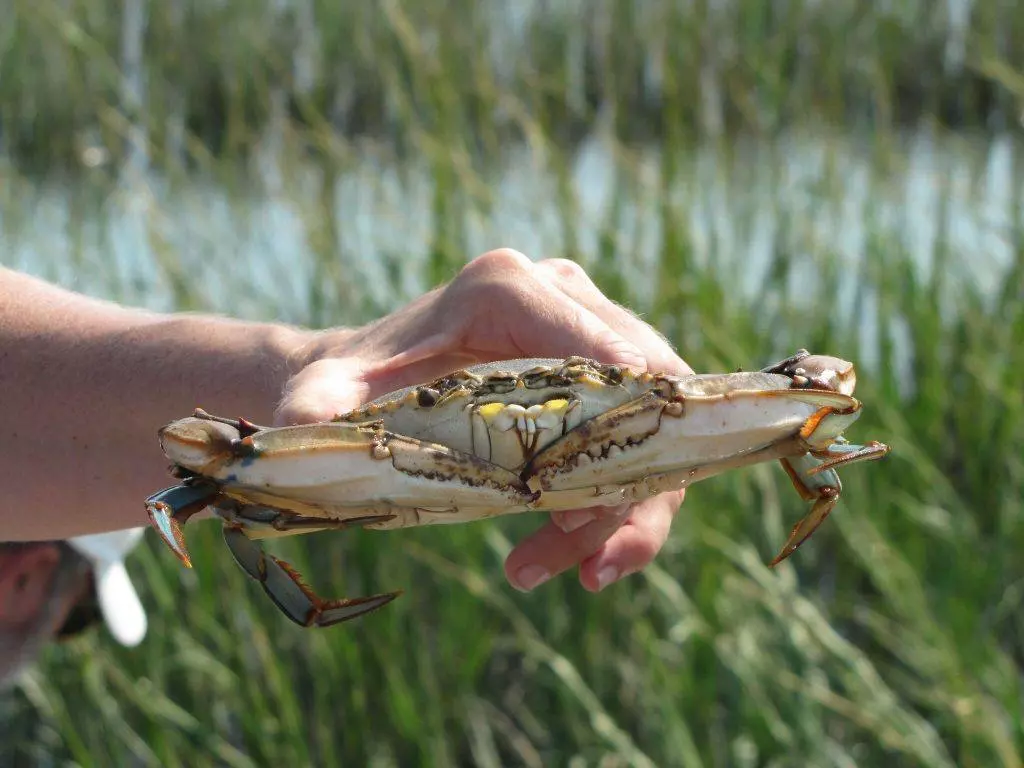
Handling and Measuring Blue Crabs
Pick up a blue crab from behind, holding the back fins or the rear edge of the shell, and keep fingers away from the claws. Measure every crab across the top shell from point to point. Keepers must be at least 5 inches wide, and any female carrying an orange or brown egg mass (a sponge crab) must go back immediately.
Keep your catch alive in a cooler or bushel basket, out of the sun and covered with a damp towel. Don’t store crabs in standing water, which runs out of oxygen fast. Cook them the same day.
Blue Crab Rules (2026)
- Minimum size: 5 inches across the shell, point to point
- Egg-bearing females: Release immediately
- Limit: 1 bushel per person per day, 2 bushels per boat (new for 2026–27)
- No license needed: Crabbing with up to 3 handlines, drop nets or fold-up traps
- Crab pots: Up to 5 traps with a $5 Recreational Crab Trap Endorsement; escape-vent rules are new for 2026–27
Regulations change, so check the current South Carolina crustacean and shellfish limits before you set traps.
Cast Netting for Shrimp and Bait
A cast net lets you catch shrimp to eat and finger mullet or mud minnows to use as bait. Throwing one takes practice. Most people hold part of the lead line in their teeth or over a shoulder, load the net across the throwing arm, then rotate the hips and release so the net opens into a circle before it hits the water. Let the leads sink, then pull the hand line to close the net and haul it in.
Look for shrimp along grassy creek banks and in the mouths of small creeks on a falling tide, and watch for nervous water or bait skipping at the surface. Start with a 5- or 6-foot net; larger nets are heavy and harder to open.
Cast Netting Rules
- A saltwater fishing license is required for cast netting and recreational shrimping if you’re 16 or older.
- Shrimping without bait is closed December 16 – April 30, except for 12 dozen shrimp per boat for use as bait.
- The limit is 48 quarts whole (29 quarts headed) per person or per boat per day.
Shrimp Baiting Season
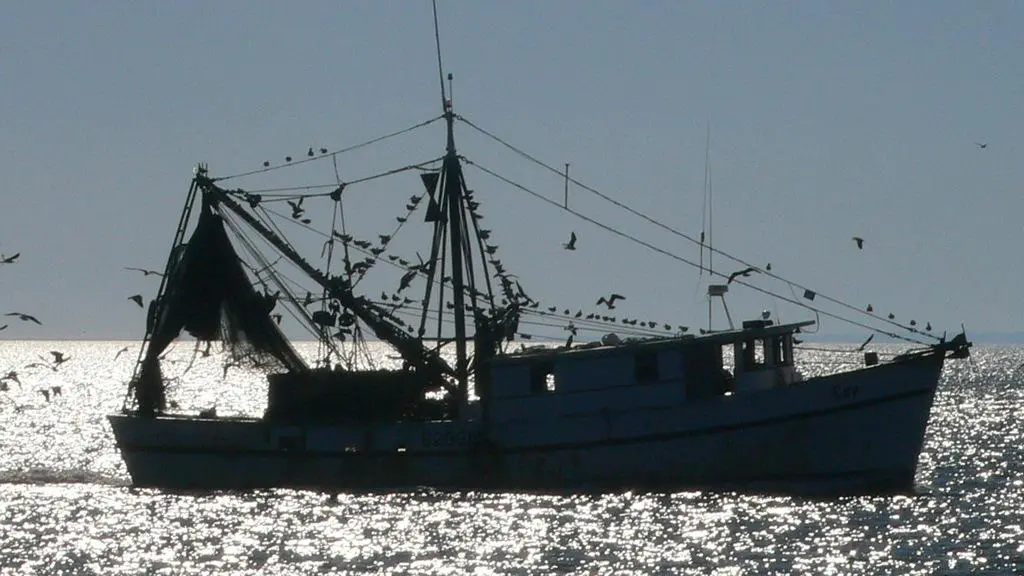
Fall shrimp baiting is a Lowcountry tradition. Shrimpers set a line of poles in a creek, toss balls of bait (usually fish meal mixed with clay or mud) beside them to draw shrimp in, then throw a cast net over each pole. It works best in the fall as shrimp move out of the creeks.
The 2026 shrimp baiting season runs from noon on September 11 to noon on November 9, 2026. The main rules:
- A shrimp baiting license is required: $25 for residents, $500 for non-residents.
- Up to 10 poles per license.
- Limit: 48 quarts whole or 29 quarts headed per day.
- Cast net mesh must be at least ½ inch square.
- Baited shrimp may not be sold.
Poles must be set and marked according to current SCDNR rules, so read the regulations before you set out. The season is set by statute at 60 days.
Where to Go Crabbing and Shrimping on Edisto
- Edisto Beach State Park: The park lists the Environmental Learning Center dock on Big Bay Creek as a fishing spot. Fishing isn’t allowed from Live Oak Boat Landing or its dock, and park admission applies. See Edisto Beach State Park.
- Botany Bay: Shore fishing, crabbing and shrimping are allowed only on the front beach and in designated areas, with no fishing from causeways. The preserve is closed Tuesdays and on hunt days. See Botany Bay.
- Public landings: Steamboat Landing and Dawho Landing are Charleston County boat landings. They are working ramps, so stay clear of boats launching and loading. See our boat ramp guide.
- Rental docks: Many vacation rentals on the creeks have private docks, often the easiest spot of all.
Wherever you go, don’t toss leftover bait or crab scraps into the water. Feeding alligators is illegal in South Carolina, and bait thrown at ramps and docks teaches gators to approach people. Report feeding to SCDNR at 1-800-922-5431.
Oysters and Clams
Recreational oyster and clam harvesting has its own season, usually closed May 16 – September 30. Limits are 2 bushels of oysters and ½ bushel of clams per person per day, and you may harvest only 2 days in any 7. Shellfish must come from areas open to recreational harvest; confirm current openings with SCDNR at (843) 953-9300 before you go.
Cooking Your Catch
Blue crabs are usually steamed or boiled. Bring a big pot of heavily seasoned water to a rolling boil, add live crabs, and cook until the shells turn bright orange, roughly 15–20 minutes depending on size. Shrimp need only a few minutes – pull them as soon as they turn pink and curl.
Shrimp are also the star of a Frogmore stew, the Lowcountry boil of shrimp, sausage, corn and potatoes, and crabs fit right in. For the bigger story of local seafood traditions, read about Gullah food. If the crabs aren’t biting, our Edisto restaurant guide lists places to eat local seafood.
Crabbing and Shrimping FAQ
Do I need a license to go crabbing in South Carolina?
Not if you use up to 3 handlines, drop nets or fold-up traps. You need the $5 Recreational Crab Trap Endorsement to use crab pots (up to 5), and a saltwater license is required for cast netting and shrimping if you’re 16 or older.
What is the best bait for blue crabs?
Raw chicken necks are the classic because they’re cheap and tough enough to stay on the line. Fish heads and oily fish such as mullet also work well.
How big does a blue crab have to be to keep in SC?
At least 5 inches across the top shell, point to point. Release any female carrying eggs.
When is shrimp baiting season on Edisto?
In 2026 it runs from noon September 11 to noon November 9. You need a shrimp baiting license in addition to the rules for the season.
What time of day is best for crabbing?
Tide matters more than the clock. Crab on a moving tide in warm weather; early morning and late afternoon are also more comfortable in summer.
Plan Your Trip
Crabbing is one of the easiest things to do on Edisto with kids. Check the Edisto tide charts before you go, see our Edisto fishing guide for rod-and-reel options, or explore the creeks by kayak.