




Edisto Beach swimming is gentle on most summer days, with warm water and a long, gradual beach. But there are no lifeguards on duty anywhere on the town beach, so every swimmer is responsible for their own safety and their family’s. A few minutes learning about rip currents, groins, jellyfish and storms will make your beach days a lot safer.
At a Glance
- Lifeguards: None on duty – the town asks everyone to practice personal water safety
- Emergency: Call 911
- Non-emergency: Colleton County dispatch, (843) 549-2211
- Rip current forecast: National Weather Service Charleston surf zone forecast, Coastal Colleton zone
- Warmest water: June through September
- Biggest hazards: Rip currents, the wooden groins, lightning and jellyfish
No Lifeguards at Edisto Beach
The Town of Edisto Beach puts it plainly: there are no lifeguards on duty. Edisto Beach State Park allows swimming but doesn’t have lifeguards either. That changes how you should swim. Stay within your ability, never swim alone, keep children within arm’s reach, and bring a flotation device that someone on shore can throw.
Rip Currents
Rip currents are narrow channels of water flowing away from shore. They can pull even strong swimmers out past the breakers, and the National Weather Service notes that they often form on calm, sunny days – not only when the surf looks rough.
How to Spot a Rip Current
- A gap of darker, calmer-looking water between breaking waves
- A line of foam, seaweed or debris moving steadily seaward
- Choppy, churned-up water in an otherwise orderly surf
- Water near the groins, where currents often run along and out past the structures
How to Escape a Rip Current
- Don’t fight the current by swimming straight back to shore.
- Stay calm and float to save energy. A rip won’t pull you under.
- Swim parallel to the shoreline until you’re out of the current, then angle back to the beach.
- If you can’t get out, face the shore, wave your arms and yell for help.
If someone else is caught, don’t swim out after them without a flotation device. Call 911, throw them something that floats and keep them in sight. Many drownings involve people trying to rescue others.
Check the Rip Current Risk
The National Weather Service office in Charleston issues a daily Surf Zone Forecast for the Coastal Colleton zone, which includes Edisto Beach, rating rip current risk as Low, Moderate or High. Check it on the NWS Charleston beach forecast page each morning, along with our Edisto weather page. On High-risk days, stay out of the water.
Stay Off the Groins
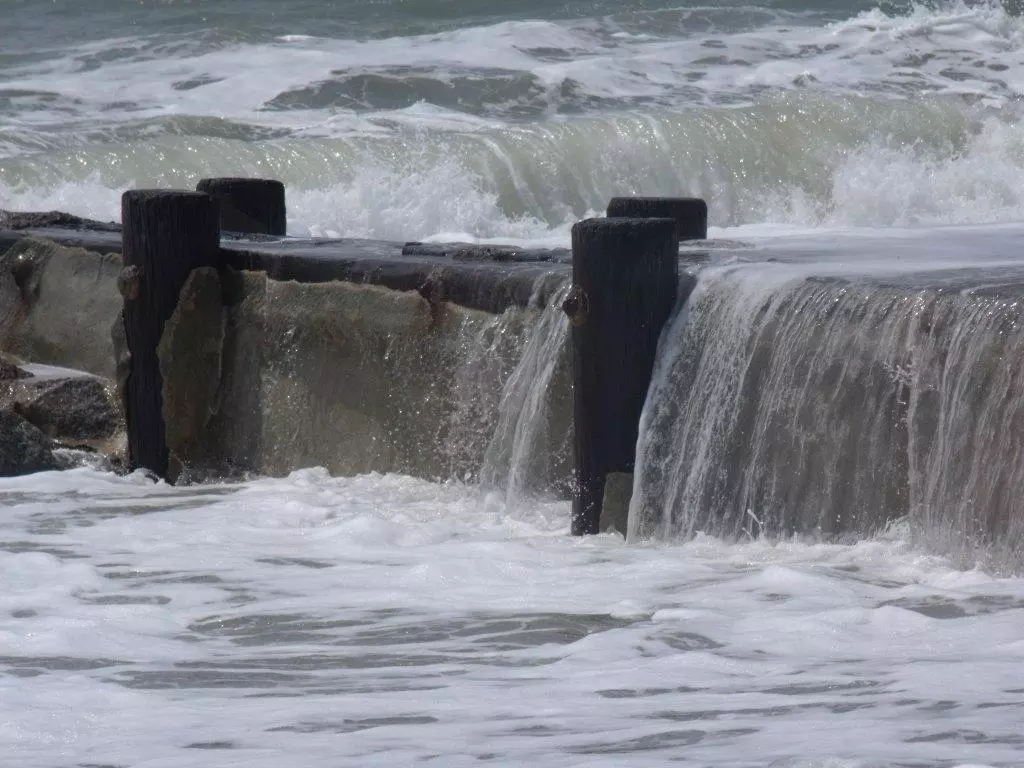
Wooden groins run out into the surf along the Edisto Beach waterfront to hold sand in place. They’re slick, covered in barnacles and oysters, and surrounded by currents. In a 2021 newsletter, the town said falls from groins were its number-one beach service call, and they usually cause injuries. Don’t climb or walk on them, and don’t swim right next to them.
Tides and Creek Currents
Tides rise and fall roughly twice a day, and the beach changes a lot between high and low. Sandbars that are easy to wade at low tide can be cut off by an incoming tide, so keep an eye on the water behind you. Check the Edisto tide charts before you go.
The inlets and tidal creeks behind the island are a different world from the ocean beach. Currents in Big Bay Creek and the inlets can be swift, the bottom drops off without warning, and alligators may be present in brackish water. Avoid swimming in creeks and marsh channels, especially at night.
Jellyfish
Jellyfish are part of summer and fall at Edisto. According to SCDNR:
- Cannonball jellyfish are the most common. They come close to shore in summer and fall and are among the least venomous.
- Sea nettles are common in summer and cause most stings in South Carolina, from moderate to severe.
- Portuguese man-of-war are infrequent but highly venomous. Treat anything with a blue or purple float as dangerous, even on the sand.
- Sea wasps (a box jelly) are the most venomous local species.
- Lion’s mane jellyfish show up in winter.
Jellyfish Sting First Aid
Get out of the water and remove any tentacles with sand or a towel, not bare hands. SCDNR says vinegar and other home remedies work with varying degrees of success, and recommends avoiding alcohol and urine. Seek medical care for severe pain, a large affected area, or any trouble breathing. More details are on the SCDNR jellyfish page.
Stingrays
Stingrays rest on the sandy bottom in shallow water. Shuffle your feet as you wade so they feel you coming and swim off – most stings happen when someone steps directly on a ray. If you’re stung, get out of the water and seek medical care. Soaking the wound in hot water (as hot as you can stand without scalding) is the usual first aid for pain.
Lightning and Storms
Summer afternoon thunderstorms build quickly over the Lowcountry, and a beach is one of the most dangerous places to be in one. The National Weather Service rule is simple: when thunder roars, go indoors. Get out of the water, leave the beach and shelter in a building or hard-topped vehicle. Wait 30 minutes after the last thunder before heading back.
Water Quality
South Carolina’s Department of Environmental Services (SCDES) monitors beach water and issues short-term swimming advisories for sections of Edisto Beach from time to time (one was issued in August 2025). Check SCDES for current advisories before swimming, especially after heavy rain.
Edisto Water Temperatures
There’s no official water temperature station on Edisto. The nearest NOAA reading is Charleston Harbor, which is close to nearshore ocean conditions:
| Month | Avg water temp (°F) |
|---|---|
| April | 67.8 |
| May | 75.6 |
| June | 82.2 |
| July | 85.4 |
| August | 85.1 |
| September | 81.4 |
| October | 74.5 |
| November | 64.4 |
Source: NOAA NCEI Coastal Water Temperature Guide, Charleston (Cooper River Entrance). Most people find the water comfortable from late May through September.
Swimming with Kids
- Keep children within arm’s reach in the water, even in the shallows.
- Put young or weak swimmers in a properly fitted life jacket. Inflatable toys aren’t safety devices and can drift out on an offshore wind.
- Pick a landmark, such as a beach access number, so kids know where to go if they get separated.
- Teach older kids how to recognize and escape a rip current.
Edisto Beach Swimming FAQ
Are there lifeguards at Edisto Beach?
No. The Town of Edisto Beach says there are no lifeguards on duty, and Edisto Beach State Park doesn’t have lifeguards either.
Is Edisto Beach safe for swimming?
On most days, yes, if you stay alert. Check the rip current forecast, stay off the groins, swim with a buddy and get out of the water when storms approach.
When is the water warm enough to swim at Edisto?
Water temperatures average in the mid-70s in May, low to mid-80s June through September, and mid-70s in October, based on nearby Charleston readings.
What should I do if I get caught in a rip current?
Stay calm, float, and swim parallel to the shore until you’re out of the current, then swim back at an angle. If you can’t, face the shore and wave and yell for help.
Plan Your Trip
Before you head out, see Edisto Beach public access for parking and beach rules, learn the sea turtle rules for summer evenings, and check out surfing and paddleboarding on Edisto. Families can find more ideas in things to do on Edisto with kids, or spend a day at Edisto Beach State Park.